نوع مقاله : مقاله پژوهشی
عنوان مقاله English
نویسندگان English
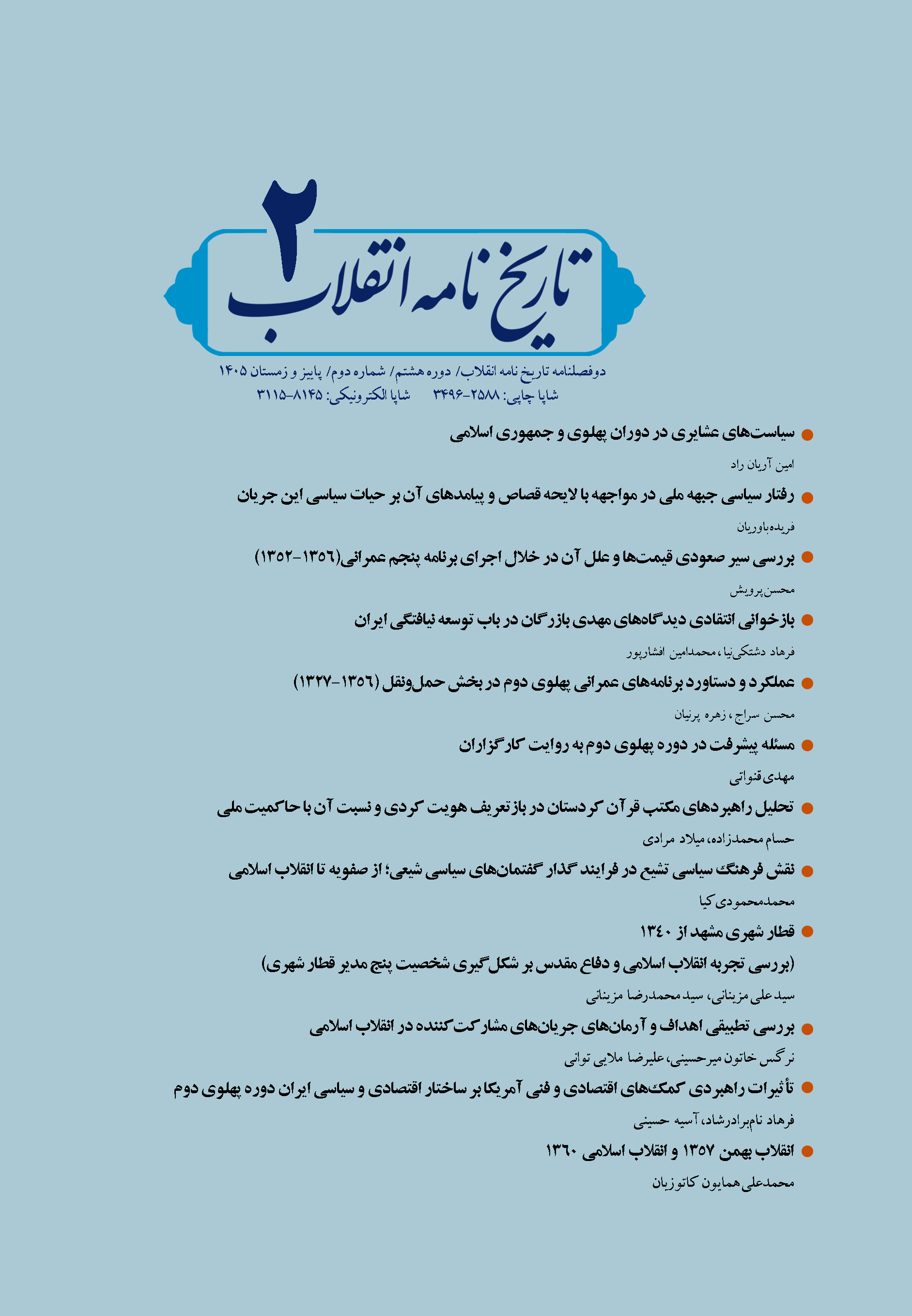
Given that sustainable development in a country depends, above all, on the availability of the necessary infrastructure and enabling conditions, and that the development of transportation networks and communication routes constitutes one of the essential infrastructures for development in any region, the main objective of this study is to provide a descriptive and statistical assessment of the plans and implementation record of the Second Pahlavi government concerning the development of the country’s transportation infrastructure, particularly its railway and road networks, with reference to the Five-Year Development Plans implemented during this period. Employing a historical research methodology based on the analysis of documentary sources and statistical data, this study seeks to address this issue. The findings indicate that transportation infrastructure was consistently addressed in all five development plans during the Second Pahlavi period. However, the attention devoted to this sector was by no means commensurate with the country’s actual needs and fluctuated considerably across different plans. Furthermore, although the overall achievements of these plans by the end of the Five-Year Development Plans came relatively close to their projected objectives, factors such as insufficient financial resources, the lack of attention to and commitment to the necessity of developing transportation infrastructure among policymakers at the time, the country’s political and economic crises, and the transfer of implementation deficiencies from one plan to the next resulted in the incompleteness, slow progress, and failure of some projects related to the development of transportation infrastructure and road construction during this period.The article argues that Iranian culture—rooted in peaceoriented foundations that have historically fostered empathy, cooperation, consensus, and national cohesion—can likewise support the establishment, expansion, and deepening of peace under current conditions. Within this framework, the essential task before the government is to adopt a realistic, diagnostic, and contextsensitive approach that enables a precise understanding of this cultural capacity and its effective application in practice. Such an approach would strengthen peace among publicsphere actors and the broader population, thereby facilitating the country’s progress toward goals such as development. The research method employed is descriptiveanalytical.
کلیدواژهها English