نوع مقاله : مقاله پژوهشی
عنوان مقاله English
نویسندگان English
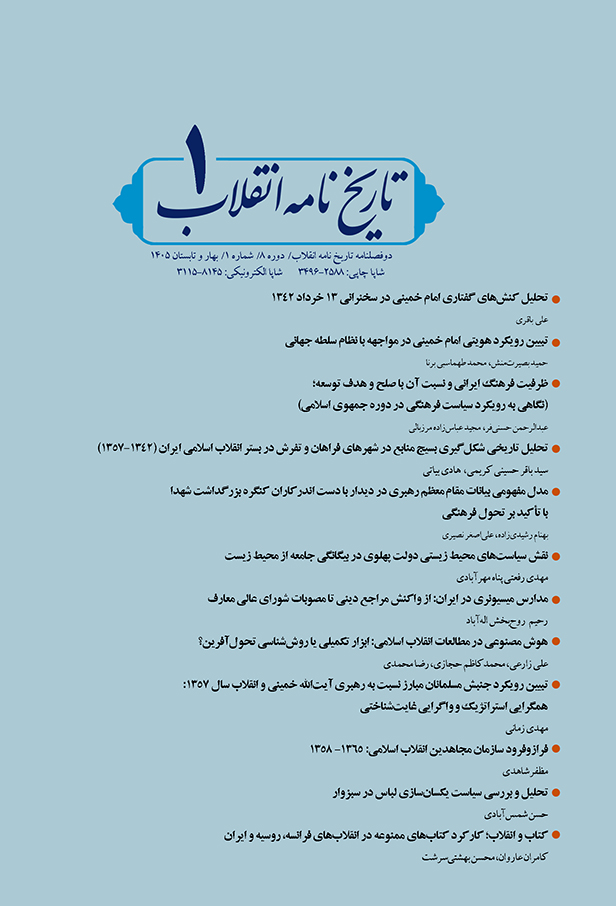
Abstract: One of the significant dimensions of the Iranian Islamic Revolution is the extent of its influence in deprived regions and small towns, as well as the active participation of their inhabitants in the revolutionary movement. Therefore, identifying the geographical scope of the Islamic Revolution and examining the process through which revolutionary movements emerged and expanded in different regions constitute important areas of revolutionary studies. This study aims to investigate the historical formation of resource mobilization in the cities of Farahan and Tafresh during the Islamic Revolution (1963–1979).This research adopts a descriptive-analytical approach and is grounded in Charles Tilly’s Resource Mobilization Theory. The required data were collected through documentary, library, and oral history sources and analyzed using the historical analysis method.The findings indicate that during the Islamic Revolution in Farahan and Tafresh, the clergy, merchants, educators, and women were among the main social groups involved in mobilizing resources against the Pahlavi regime. In addition, non-organizational groups operated primarily under the leadership of clerics and within mosques and religious centers. The resources employed included utilitarian resources, such as disseminating information through cassette tapes, and normative resources, including the organization of religious ceremonies during the months of Muharram, Safar, and Ramadan. Resource mobilization patterns also emerged in both defensive and offensive forms.The results demonstrate that resource mobilization played a significant role in organizing and expanding revolutionary activities in Farahan and Tafresh. Collective actions in these areas can be classified into reactive collective actions and innovative collective actions. This finding highlights the influential role of social and religious forces in the spread of the Islamic Revolution in these two counties.
کلیدواژهها English